Interview with Marija Ristovska: Building equal opportunities in e-commerce and the digital industry
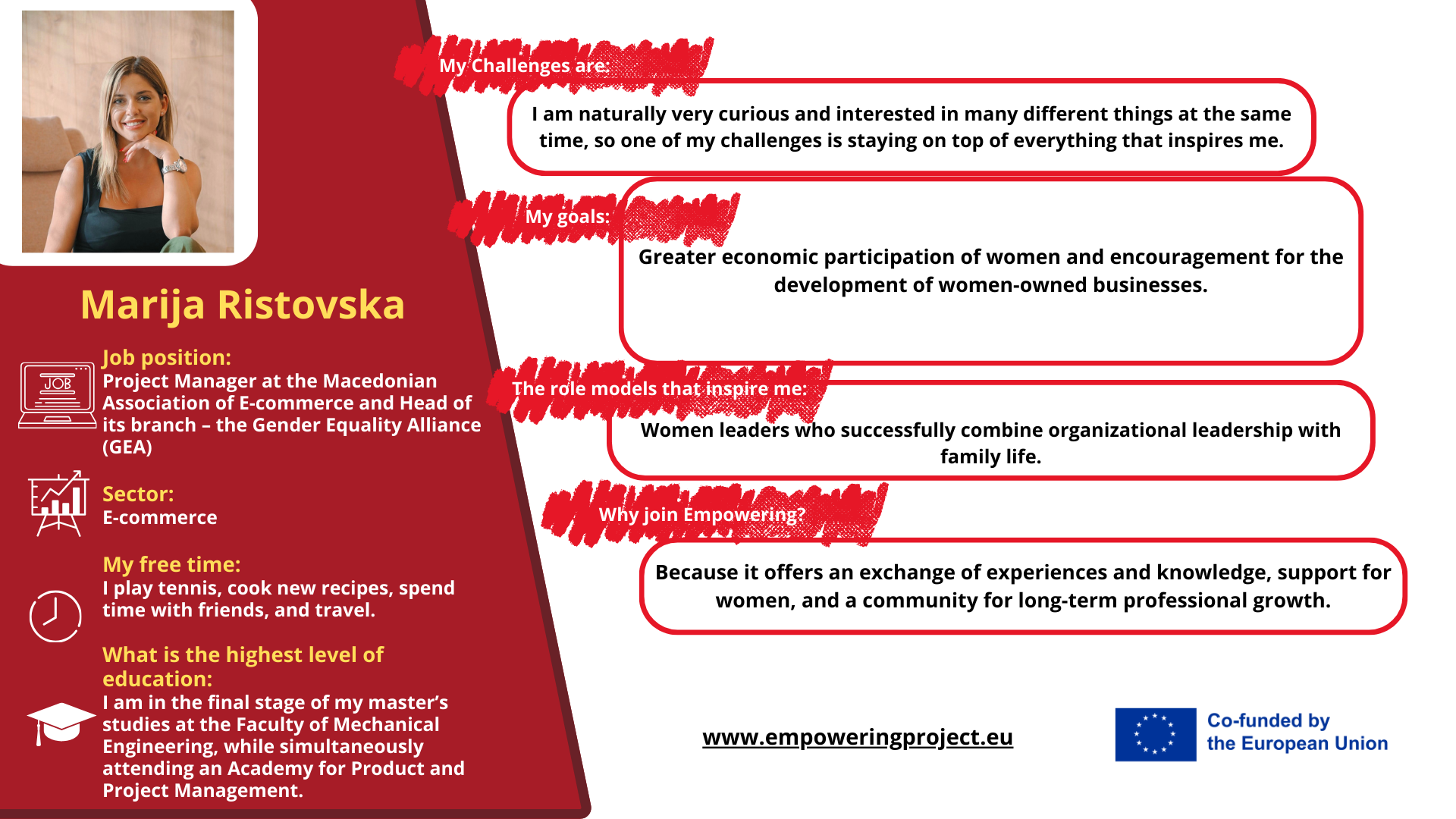
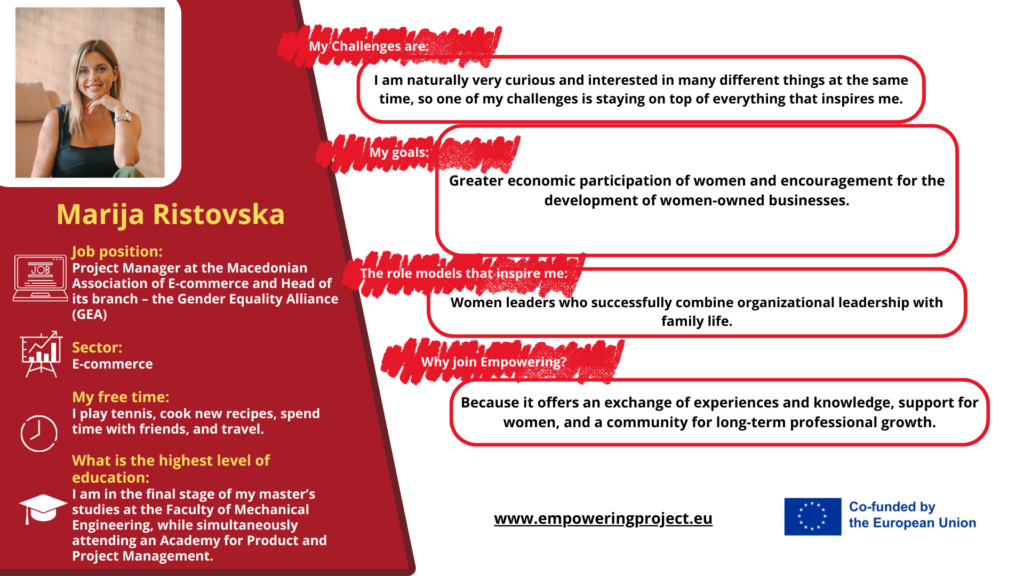
We have created a platform for millennial women working in the industry who are ready to share their success stories. We launched a series of interviews to highlight their inspiring experiences and achievements, focusing on women who are transforming the world around them. In this edition, we spoke with Marija Ristovska, Project Manager at the Macedonian Association of E-commerce (AETM) and Head of its branch – the Gender Equality Alliance (GEA).
Can you tell us more about the company where you are working and its objective?
I work as a Project Manager at the Macedonian Association of E-commerce and as Head of its branch – the Gender Equality Alliance (GEA). AETM advocates for the development of e-commerce in our country and for removing barriers that hinder its growth, while the work of GEA focuses on three key pillars: equal pay for equal work, equal opportunities for career advancement, and equal representation of men and women at all levels and positions in the workplace.
Our work is oriented toward long-term initiatives, education through workshops, conferences, campaigns, and research, as well as advocacy, with the aim of achieving systemic change. My role includes project management, strategic planning, partnership development, event organization, and communication with the public and media, all with the goal of improving economic participation – especially for women in North Macedonia.
What challenges have you faced as a millennial woman working in your industry, and how have you overcome them?
One of the most common challenges I have faced is subtle yet persistent stereotypes in professional interactions. At meetings that were initiated, scheduled, and led by me, it has happened, especially when the interlocutor is male, that at a certain point the conversation and attention are entirely redirected toward my male colleague, even though he is not the initiator or lead of the meeting. These situations are not examples of overt discrimination, but rather deeply rooted stereotypes about who is “naturally” perceived as an authority.
These and similar stereotypes faced by women in the workplace were part of the inspiration for creating the Gender Equality Alliance (GEA). The goal of the Alliance is to highlight positive examples of domestic companies that implement gender-equal practices and policies, and to work together on reducing unconscious stereotypes in the work environment.
On a personal level, I have learned to define my role more clearly and not to withdraw in situations where my contribution is evident.
What competencies or skills do you believe are most valuable for millennial women in the workplace, and why?
In my opinion, the most valuable skills are a combination of adaptability, creativity, critical thinking, and emotional intelligence. In project work and collaboration with various partners and stakeholders, things rarely go exactly as planned, and last-minute changes are common. This requires flexibility and the ability to quickly find creative solutions that work for all involved parties.
Additionally, millennial women often work in rapidly changing environments, making the ability to make decisions with limited information extremely important. Furthermore, I believe that emotional intelligence and relationship-building skills are a significant advantage, especially in multidisciplinary or international teams.
How can millennial women continue to develop and refine their skills in the industry?
Women can develop and refine their skills through continuous learning, participation in various initiatives, and by building professional networks. Formal education is important, but it is equally crucial to consciously invest in oneself through specialized training or mentorship. Especially in the era of artificial intelligence (AI), it is important to take advantage of the opportunities technology offers: AI can provide a first draft, but the real magic comes from human creativity. That is why it is essential for women to develop skills for the effective use of AI.
Participation in domestic and international conferences also enables exposure to new trends, broadening perspectives, and building connections with like-minded individuals.
Additionally, though it may not seem intuitive, I would recommend travel as part of skills development and professional growth. Traveling provides direct exposure to new ideas, advanced technologies, and innovations that can later be easily applied, initiated, or adapted in North Macedonia.

How do you think millennial women bring a unique perspective to the industry compared to previous generations?
I believe millennial women bring a unique perspective because they are not confined to the traditional paths of previous generations. In the past, professional success often depended on the level of formal education completed and the number of hours invested in work. However, with the rise of the internet and globalization, things have changed, and millennials learned to work “smart, not just hard,” combining knowledge with adaptability.
Moreover, unlike previous generations, millennial women grew up with mobile phones and various digital tools (remember Winamp?), making them naturally interdisciplinary and globally oriented. This has enabled millennial women to introduce new perspectives in problem-solving and to enrich industries with a fresh, technologically informed, and innovative outlook.
In my view, millennials often act as a bridge between the earlier “pre-internet” generations and Generation Z, carrying forward a combination of hard work and professional dedication inherited from previous generations, alongside digital literacy and fresh ideas shaped by the internet era.

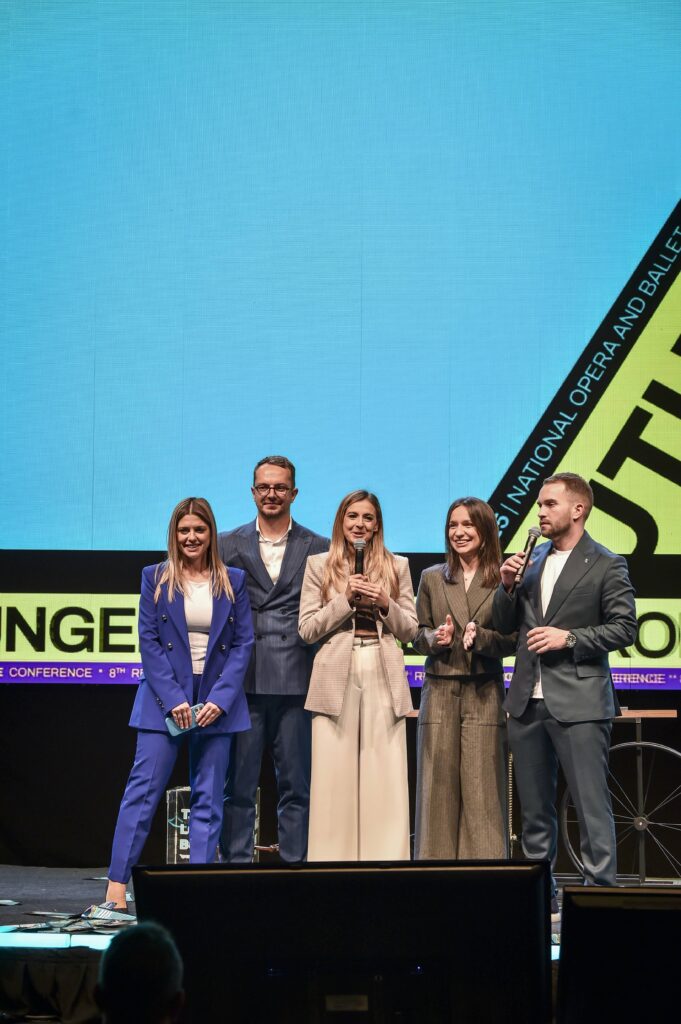
How do you see the role of mentorship and support networks playing a part in the advancement and success of millennial women in the workplace?
Recently, within the framework of the Gender Equality Alliance (GEA), we conducted the “Leaders’ Insights to Success” campaign, aiming to highlight successful female role models from North Macedonia. Nearly all interviewed women pointed out that their success was supported by formal or informal mentorship, either domestically or abroad.
Accordingly, I believe that mentorship, as well as involvement in organizations such as GEA, AETM, and similar initiatives, is crucial for the advancement and success of millennial women. These networks serve not only for knowledge transfer but also for fostering a sense of belonging. Additionally, strong networking and direct connections can open many new opportunities, but even more importantly, they help women avoid feeling isolated while building their professional paths.

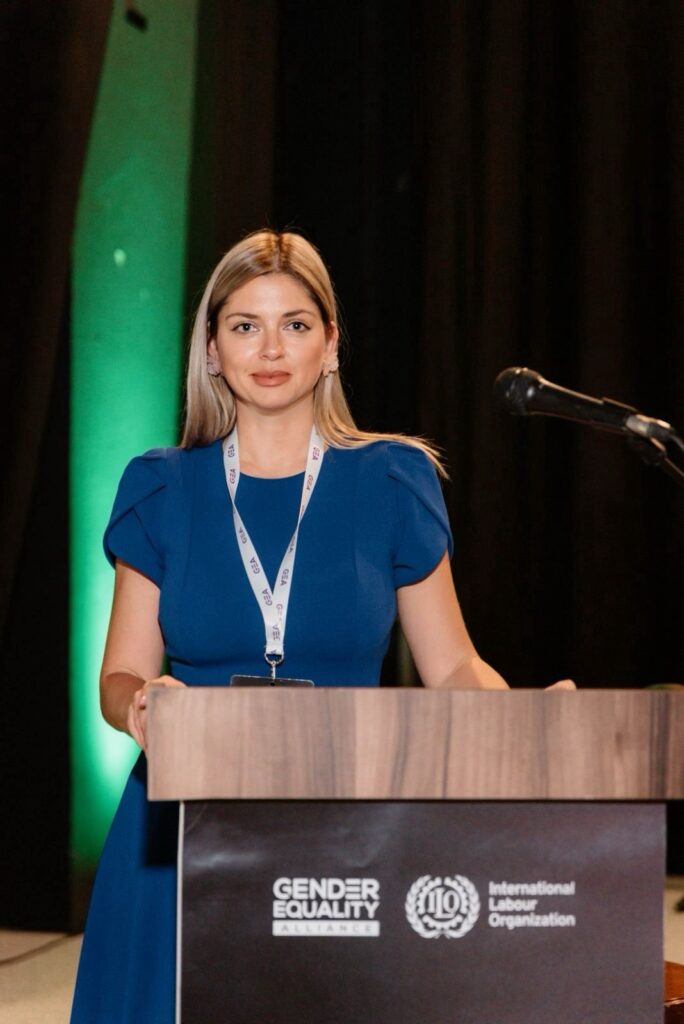
Marija Ristovska
Project Manager at the Macedonian Association of E-commerce (AETM) and Head of its branch – the Gender Equality Alliance (GEA).