Interview with Ljubica Pendaroska Krstevska: Millennial women as drivers of ethical and responsible cybersecurity
We have created a platform for millennial women working in the industry who are ready to share their success stories. We launched a series of interviews to highlight their inspiring experiences and achievements, focusing on women who are transforming the world around them. In this edition, we spoke with Ljubica Pendaroska Krstevska, an international consultant and trainer, and President and Founder of Women4Cyber North Macedonia.
Can you tell us more about the company where you are working and its objective?
My professional work is a combination of consulting and training expertise, as well as a strong social mission. For more than 15 years, I have worked as an independent consultant and international expert in the fields of data protection, privacy, and cybersecurity, with a strong focus on how technology impacts people and their rights. Throughout my career, I have collaborated with public institutions, private companies, and international organizations, helping them not only to become “regulation-compliant,” but to build systems that are sustainable, ethical, and worthy of trust.
For me, data protection and cybersecurity are not just technical issues – they are primarily questions of human security, responsibility, and trust. That is why, in every project, I advocate for digital transformation that does not come at the expense of people’s privacy and dignity, but instead strengthens them while enabling growth for both companies and society.
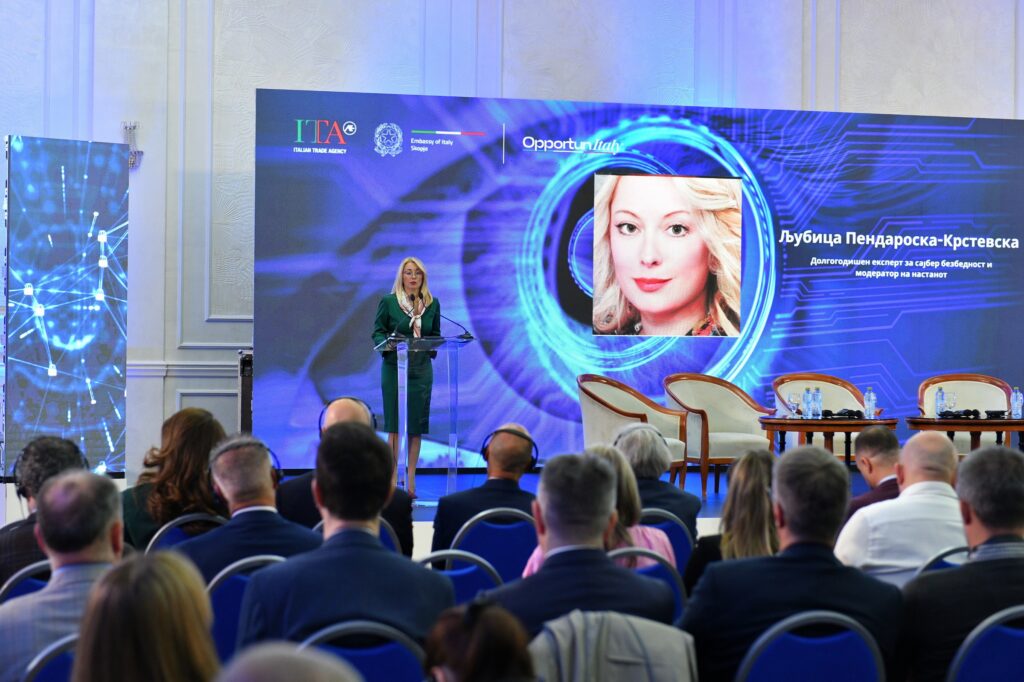
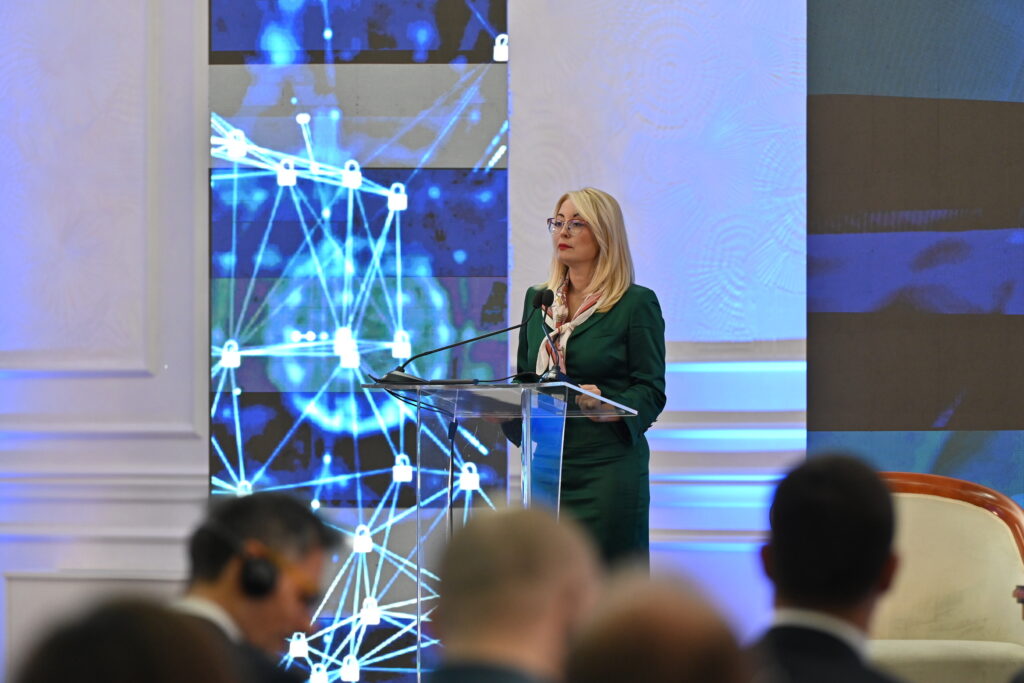
Alongside my consulting work, I serve as the President and Founder of Women4Cyber North Macedonia, an organization that emerged from a clear need – to create space for women in cybersecurity, make them visible, and encourage them to enter and advance in this strategically important field. As President, my role is not merely formal but deeply hands-on: I work with the team to develop education, mentorship, and professional networking programs, initiate public debates on gender-responsive cybersecurity policies, and actively advocate for the inclusion of women’s perspectives in shaping security and digital policies.
I see Women4Cyber North Macedonia as a platform that drives change, not only for women, but for the entire cybersecurity ecosystem. Because a safer digital world is built when diverse voices, experiences, and perspectives are involved in shaping it.
What challenges have you faced as a millennial woman working in your industry, and how have you overcome them?
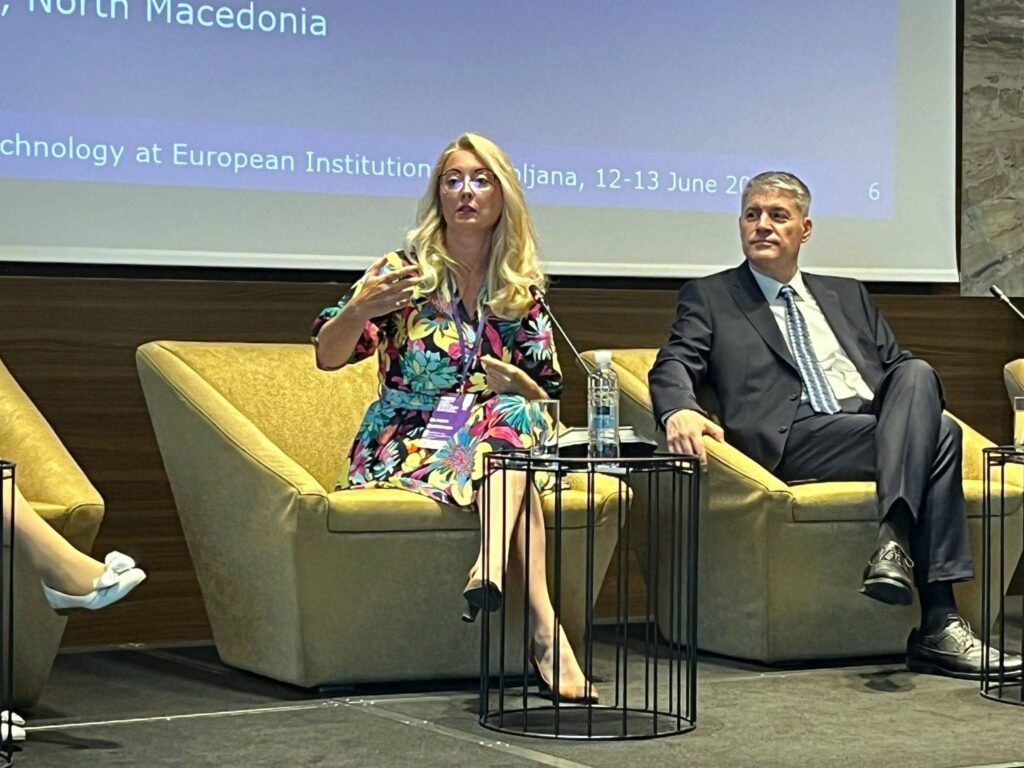
When I first entered the world of cybersecurity and technology policy, I quickly realized that I was stepping not only into a complex and dynamic field, but also into a space traditionally perceived as “male-dominated.” In meetings and expert panels, I was often the youngest person in the room, and very often the only woman. As a result, I frequently had to spend additional time “proving” my expertise and experience, even when I already had a strong track record behind me.
I also faced subtle age-related biases (which, from today’s perspective, were sometimes understandable), assumptions that youth equates to less experience or insufficient strategic maturity. These were not always explicit comments, but rather looks, hesitations, and unspoken tests that others did not have to endure.
Instead of letting this discourage me, I used it as motivation. I invested in continuous learning, built a strong and recognizable expertise, and actively sought international experience that would provide broader perspective and credibility. Rather than trying to fit into predefined molds, I consciously chose to build my own professional identity -grounded in quality, consistency, and integrity.
Over time, the conversations changed. Prejudice gradually gave way to trust, and trust led to partnerships and leadership roles. This experience taught me that real change does not come from adapting to expectations, but from perseverance and staying true to yourself, even when the path is more challenging.
What competencies or skills do you believe are most valuable for millennial women in the workplace, and why?
Throughout my career, I have learned that technical knowledge is only a starting point, important, but never sufficient on its own. What truly makes a difference, especially for millennial women, are skills that we often undervalue because they come “naturally.” Critical thinking, the ability to ask the right questions, and ethical judgment are essential, particularly in fields like cybersecurity, where every technical decision has real-world consequences for people.
I have often found myself in situations where I needed to “translate” complex risks into language understood by lawyers, decision-makers, and the general public. This is where communication skills and interdisciplinary collaboration become invaluable. Millennial women often have a strong intuition for connecting technology with law, social impact, and human rights – a perspective that today is not “extra,” but essential.
Adaptability is equally important. We live in an era where no degree or title guarantees lifelong relevance. The willingness to learn continuously, change direction, and embrace new roles is one of the greatest strengths. So, don’t wait until you feel “perfectly prepared” to take a step forward. Curiosity, the courage to learn on the go, and confidence in your own voice are skills that eventually turn into leadership.
How can millennial women continue to develop and refine their skills in the industry?
In an industry that is evolving at an incredible pace, continuous education is not a choice, it is a necessity. Formal training and internationally recognized certifications can provide a strong foundation, not only as proof of knowledge, but also as tools for building confidence and professional credibility. Especially in cybersecurity, certifications often open doors and create a shared language among professionals across countries and sectors.
However, real growth does not come only from diplomas and certificates. Practical experience, attending conferences and workshops, and participating in professional communities enable learning from real-life situations, exchanging experiences, and building networks that are often just as valuable as formal education.
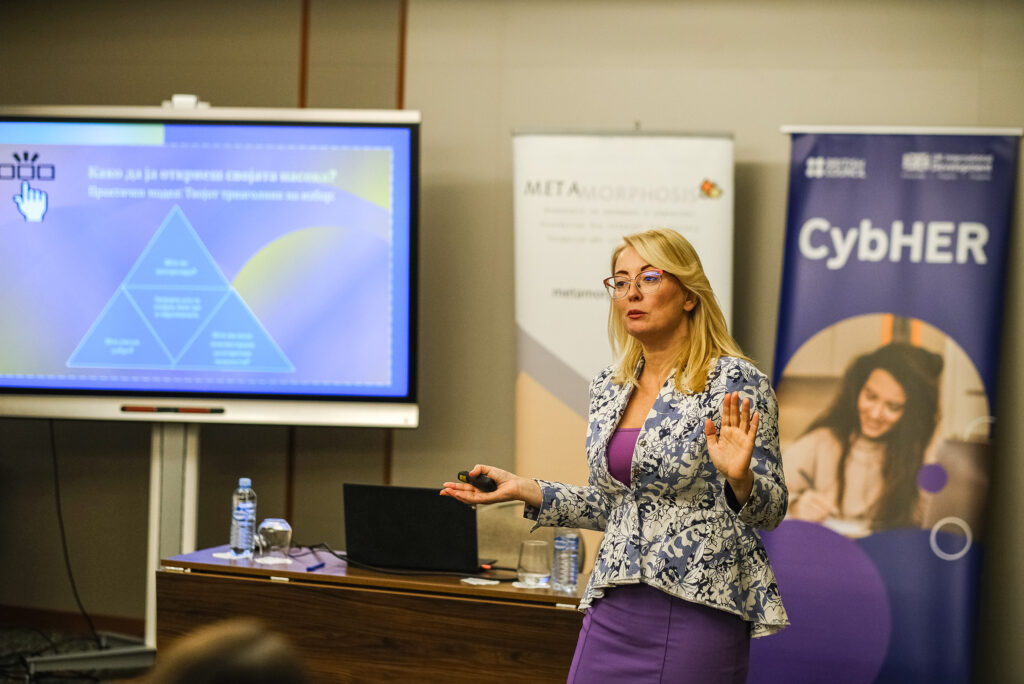
I would especially highlight the role of mentorship programs. Mentorship is not just about someone “guiding” you, it helps you recognize your own potential faster, avoid common pitfalls, and make more informed career decisions. At the same time, sharing knowledge with other women—even when you are at the beginning of your own journey, creates a culture of support and solidarity that is essential for long-term success.
And perhaps most importantly, women should not wait for the “perfect moment” to get involved, apply, or take on a new role. Confidence does not come before experience – it is built through it. The courage to step forward, even when we don’t feel fully ready, is often the step that makes the biggest difference. This is where my personal motto comes from: Inspire, and allow yourself to be inspired!
How do you think millennial women bring a unique perspective to the industry compared to previous generations?
Millennial women are the first generation to grow up alongside the digital expansion, from the first internet connections and social networks to today’s complex digital ecosystems, artificial intelligence, and cyber risks. This gives them a unique, intuitive ability to understand both the potential and the darker side of technology. They don’t see technology as an abstract system, but as something that directly impacts real people’s lives.
That is why millennial women bring a strong awareness of privacy, digital rights, ethics, and the societal impact of technological solutions. For them, the question “Can we?” increasingly goes hand in hand with “Should we?” and “Who are we doing this for?” In industries like cybersecurity, this perspective is invaluable, because security is not just a technical issue – it is a matter of trust, responsibility, and human dignity.
Additionally, this generation is far more open to collaboration, knowledge sharing, and community-building. Millennial women are not afraid to ask for support, and just as importantly, to offer it, creating work environments that are more inclusive and humane. They bring values-based leadership, leadership rooted not only in hierarchy, but in influence, empathy, and integrity.
The message to young girls is clear: your experience, sensitivity, and way of thinking are needed today more than ever. You don’t need to adapt to the industry, the industry needs to evolve with your help.
How do you see the role of mentorship and support networks playing a part in the advancement and success of millennial women in the workplace?
Mentorship and support networks are much more than tools for career advancement, they are spaces where confidence is built, doubts are normalized, and the feeling of not being alone on the journey is reinforced. Especially for millennial women, who often navigate high expectations, rapid change, and internal pressure to “prove they belong,” mentorship can be a decisive factor.
One honest conversation with a mentor, one shared story about failure or overcoming fear, can mean more than ten formal trainings. Support networks create safe spaces where mistakes are not seen as weaknesses, but as lessons, and where success is not a reason for distance, but for shared pride. They teach us that we don’t need to know everything in advance, and that asking questions is a sign of maturity, not insecurity.
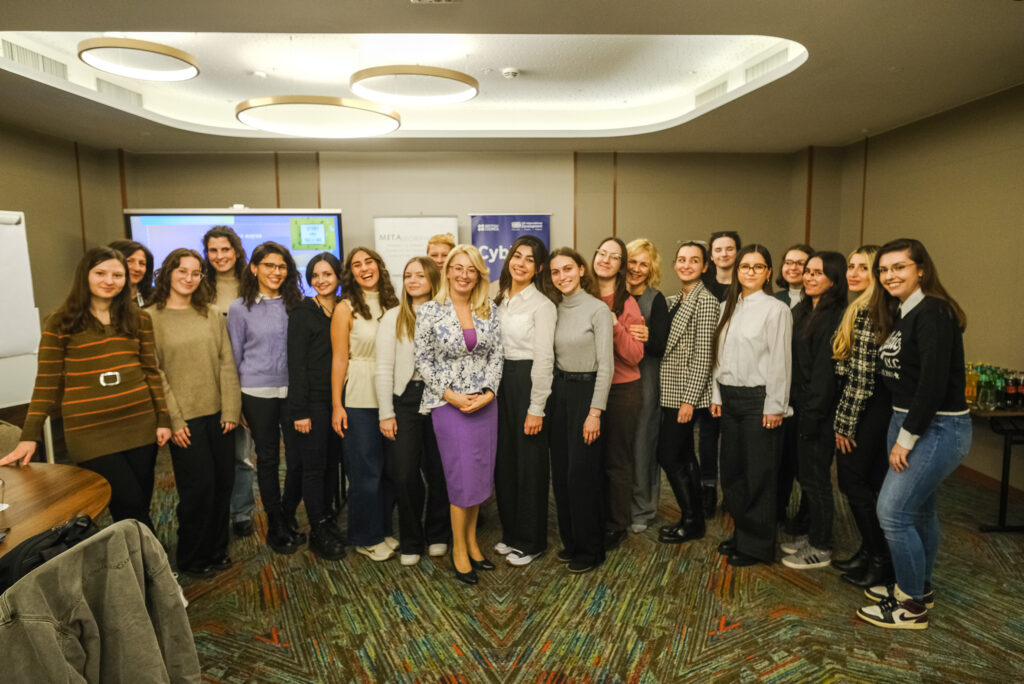
Women4Cyber North Macedonia emerged from exactly this need, as a platform where women are not competitors, but allies. A place where knowledge is shared, doors are opened, and a community is built in which every woman has a voice, support, and room to grow. When women reach out and support one another, they create a synergy that goes beyond individual careers and transforms the entire ecosystem.
My message to young girls and women is simple but sincere: don’t wait for permission to be part of the space that interests you. Seek a mentor, join a community, stay curious and courageous. Your voice, knowledge, and perspective are needed, and when one woman moves forward, she unknowingly opens the path for many others.
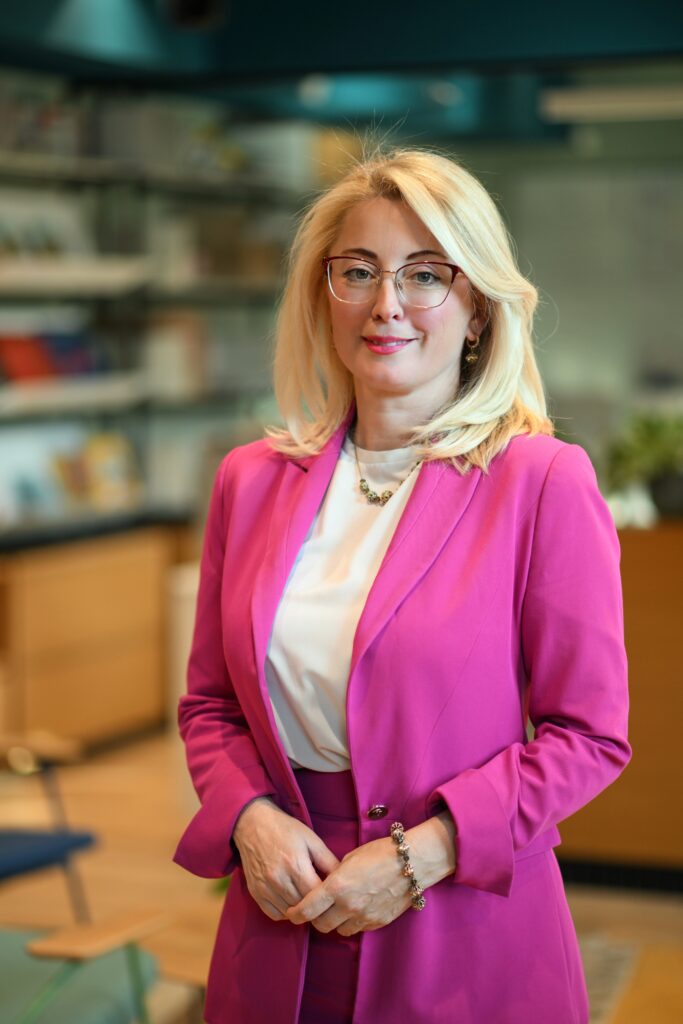
Ljubica Pendaroska Krstevska
International consultant and trainer, and President and Founder of Women4Cyber North Macedonia.