Artificial intelligence in medicine – Interview with Filip Trajkovski, one of the winners of the Science communication competition
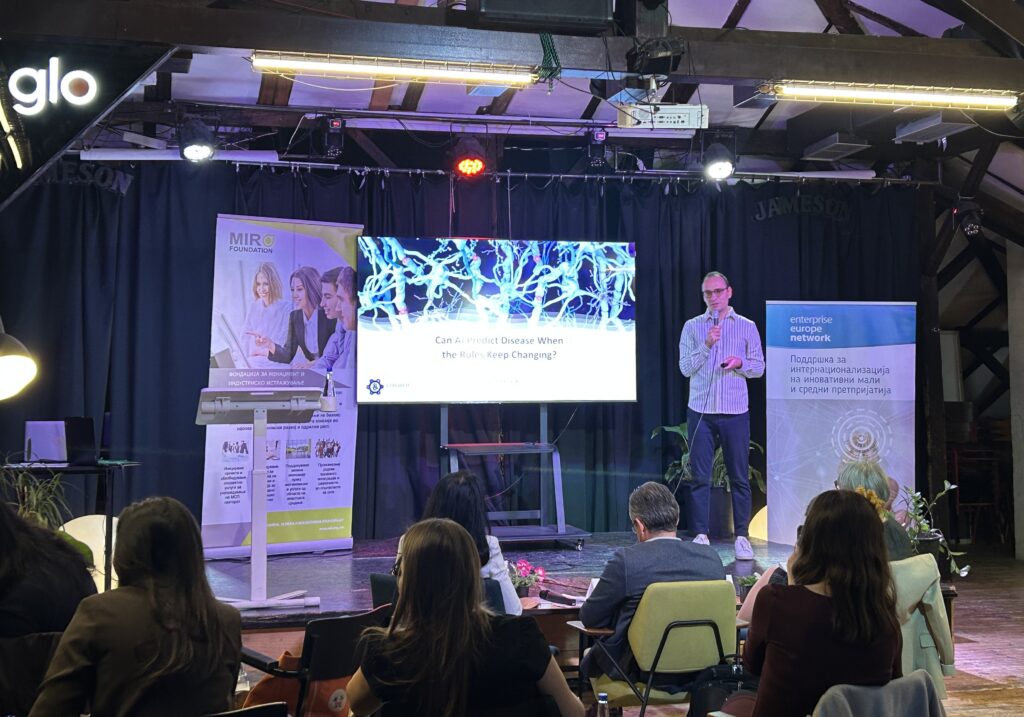
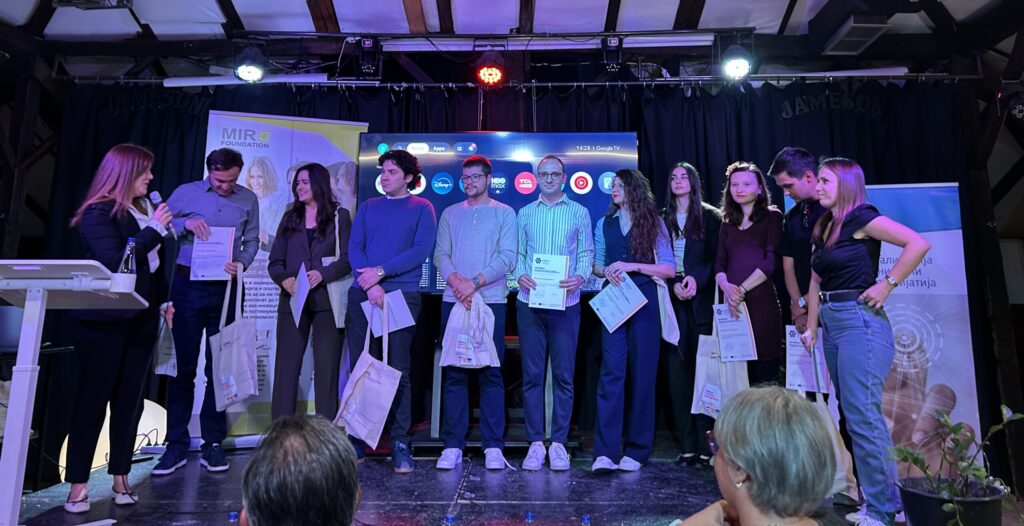
As part of the STREAM IT Mentoring Programme for science communication, a national competition was organised where young researchers had the opportunity to present their scientific ideas to a wider audience. We spoke with Filip Trajkovski from the University of Padua, who won third place with his presentation: “Can artificial intelligence predict disease when the rules are constantly changing?”.
To begin with, could you tell us a little more about yourself – what did you study, and what inspired you to choose this field?
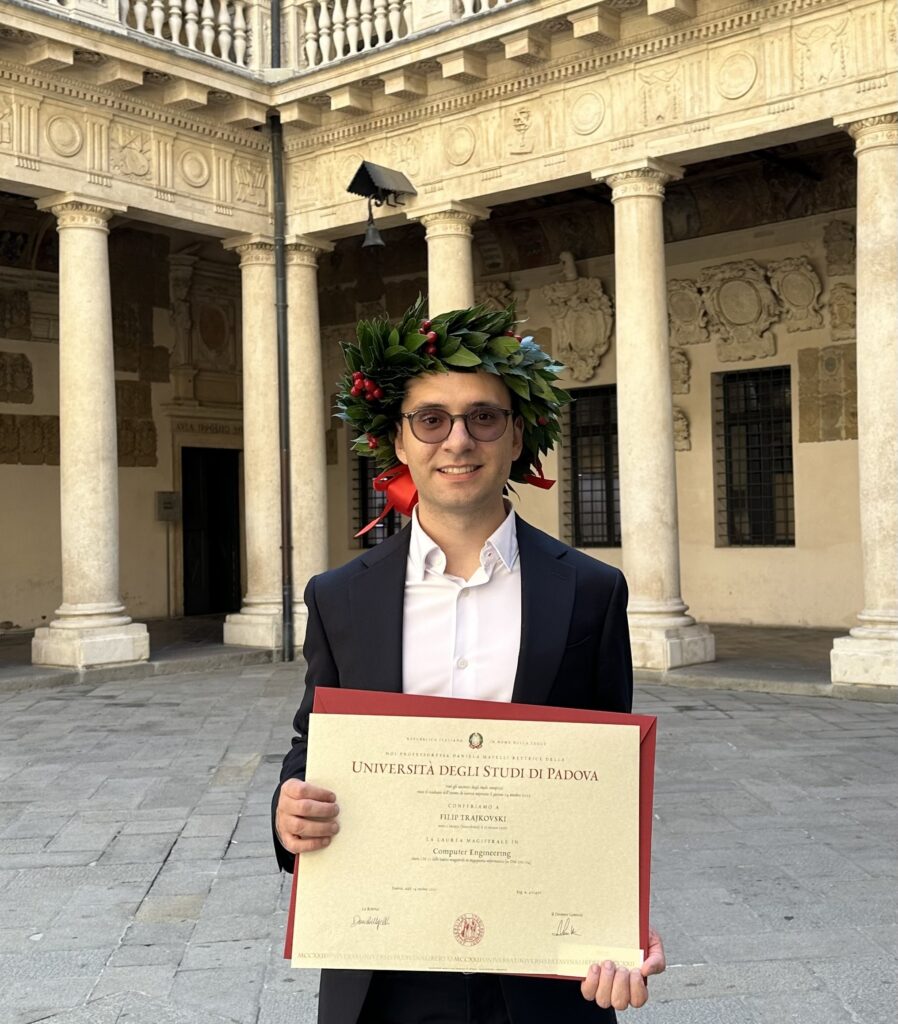
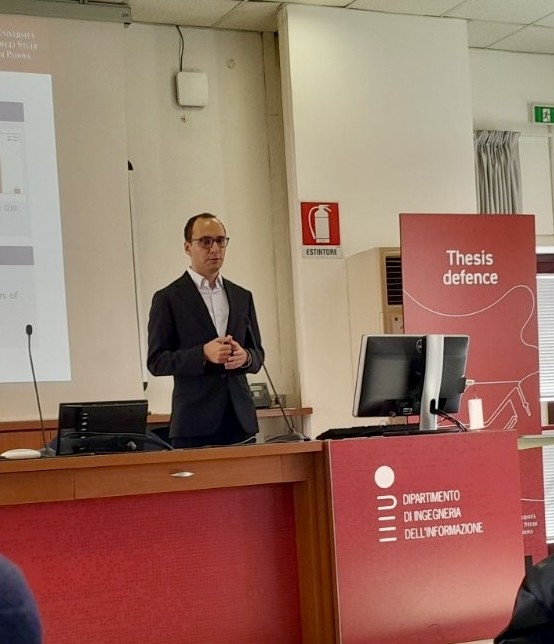
In October last year, I completed my master’s studies in Bioinformatics at the University of Padua, and I am currently working as a Machine Learning Engineer. During my studies, I focused mainly on machine learning, data science, and their application in biomedical and healthcare research.
What attracted me most to bioinformatics was its interdisciplinary nature – the connection between biology, medicine, artificial intelligence, and data analysis. I like that this field is not only theoretical, but also contributes to solving key challenges, such as the development of new medicines, the repurposing of existing drugs that may be useful for other diseases, the identification of genetic predispositions to illness, personalised diagnostics and disease monitoring, as well as the design of clinical studies and the analysis of their results.
During my master’s thesis research, I worked on a project related to predicting disease progression through the analysis of longitudinal clinical data, the simulation of realistic disease progression scenarios, and the development of predictive deep learning models.
What motivated you to apply for the mentoring programme, and what expectations did you have when you joined?
I was motivated by the desire to learn more and to receive guidance from someone with greater experience, especially in the areas of research, presentation, and clear communication of ideas. For me, the mentoring programme was an opportunity to step outside the traditional academic framework and gain a different perspective on how a topic can be developed and explained more clearly, confidently, and effectively.
Often, when we work on research topics, we are focused mainly on the technical side, but we rarely get the opportunity to learn how to bring that work closer to a wider audience. That was one of the main reasons why I decided to apply.
I joined the programme expecting to learn how to better structure and present a complex topic, but also to gain new knowledge and skills in science communication. Honestly, I did not expect the experience to have such a strong impact on my confidence, public speaking, and the way I think about my own work. The programme helped me realise that a good idea has real value only if we are able to communicate it clearly and understandably.
How did the idea for the topic you presented at the competition come about, and what was the research and preparation process like?
The idea for the topic came directly from the research I worked on during my master’s studies in Bioinformatics. My master’s thesis focused on the application of machine learning and models for analysing time-series clinical data, with the aim of predicting the progression of amyotrophic lateral sclerosis (ALS) – a rare and complex neurodegenerative disease.
What interested me about this topic was the fact that the course of the disease can vary significantly from one patient to another, which makes it very difficult to predict. This is where I saw an opportunity to explore whether artificial intelligence could be used to better model and understand disease progression.
The research began with work on large clinical databases containing information about patients monitored over a longer period of time – including functional scores, laboratory results, demographic data, and various medical measurements. One of the most challenging parts was the preparation of the data itself, because medical data is often incomplete, unstructured, and collected in different formats.
A large part of the process was dedicated to cleaning, combining, and structuring the data, as well as analysing which information was most relevant for monitoring disease progression. After that, I worked on developing and comparing several deep learning models, such as recurrent neural networks and Transformer architectures, which were trained to predict patients’ future condition by analysing their previous clinical data over time.
A particularly interesting part of the research was that I did not focus only on predicting one overall score, but on modelling several different aspects of patients’ functional condition separately, in order to gain a more detailed understanding of the course of the disease. Throughout the work, I also explored how the models respond when there are changes in data patterns, how well they can adapt to different stages of the disease, and how they perform in different simulated disease progression scenarios.
The entire process showed me how complex the application of artificial intelligence in medicine really is, but also how much potential this field has for the future – not only for data analysis, but also for supporting research, personalised medicine, and a better understanding of complex and rare diseases.
What was the biggest challenge during the preparation process, and how much did the mentoring support help you overcome it?
The biggest challenge was finding the right balance between technical depth and simplicity in the presentation. When you work on a topic for a long time, it is easy to assume that some things are “obvious”, but for an audience encountering the topic for the first time, they can actually be very complex.
The mentoring support helped me a lot in this regard. I received useful advice on structure, clarity, and the way I could tell the story behind the topic. What helped me especially was that the mentors constantly encouraged us to think not only about what we wanted to say, but also about how the audience would experience it. This helped me feel more confident during the presentation and made the topic much more accessible, visual, and engaging.
Was there any piece of advice, feedback, or moment from the mentoring process that particularly stayed with you?
One piece of advice that stayed with me the most was that science communication does not mean “simplifying science”, but bringing it closer to people. That really changed the way I think. We often feel that if a topic is complex, it also has to sound complex, but in reality, the greatest value lies in being able to explain something difficult in a clear and natural way.
In addition to this, the encouragement to be more authentic in my presentation and to show my personal interest and enthusiasm for the topic meant a lot to me. I think that is exactly what makes the difference between a technically good presentation and a presentation that truly leaves an impression on the audience.
How did this experience influence your plans for future academic and professional development?
This experience further motivated me to continue working on research topics that connect artificial intelligence with real social challenges. It showed me that, in addition to technical knowledge, communication, presentation, and the ability to bring an idea closer to people are also extremely important.
In the future, I would like to continue working on interdisciplinary projects, especially in areas where machine learning and data analysis can have practical and social value, including issues related to medicine and human health. In addition, this experience gave me greater confidence to participate in future conferences, competitions, and international programmes where I can continue learning and developing.
7. What was the most interesting thing you learned about how science can be brought closer to the wider public?
The most interesting thing for me was realising that people connect with science much more easily when it is presented through real examples, human stories, and clear context. It is not enough to simply present facts or numbers – it is important for the audience to understand why the topic matters and how it affects everyday life.
I also realised that visual communication and storytelling play a huge role. Sometimes, a good analogy, a strong visual, or a simply framed question can make a complex scientific topic feel much more familiar and interesting to people. Science communication is, in fact, a bridge between knowledge and society, and that was one of the most valuable lessons I learned.
What would you say to young people who are unsure whether to apply for programmes like this and step outside their comfort zone?
I would tell them that the greatest growth often happens outside the comfort zone. I think many young people hesitate because they feel they are not “ready enough” or that they do not have enough experience, but programmes like this exist precisely to support that process of learning and development.
For me, this experience gave me not only new knowledge, but also new contacts, greater self-confidence, and a much broader perspective. Even if there is uncertainty at the beginning, the experience is truly worthwhile because it teaches you to believe in yourself more, to accept challenges, and to discover abilities you may not have known you had. That is why I would encourage all young people to apply, try new things, and not be afraid to be ambitious.
This program is part of the ST(R)E(A)M IT project, a project which aims to initiate change about the persisting gender inequalities in STEM education, research, and innovation to contribute to the implementation of the ‘The European Manifesto for gender-inclusive STE(A)M education and careers.’ The project aims to overcome the barriers and challenges faced by underrepresented groups in STEM. It focuses on developing innovative, gender- and diversity-inclusive tools for educating young people, particularly young girls. Additionally, the project seeks to mobilize stakeholders from various sectors of STEM education and the R&I ecosystem to create sustainable networks that provide ongoing support to STEM education providers.